


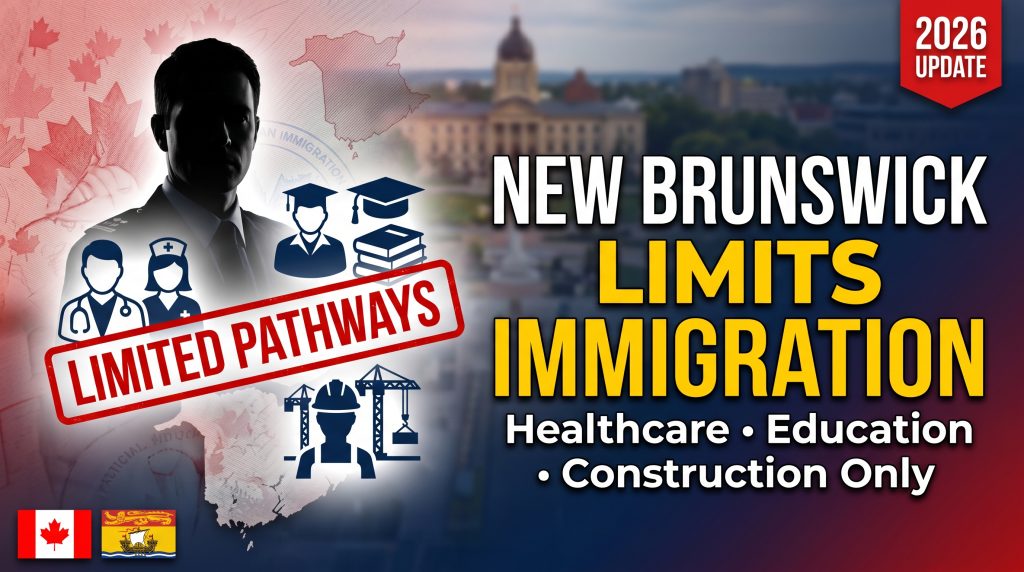
New Brunswick has announced major changes to its immigration system, limiting invitations under a key provincial immigration pathway to workers in only three priority sectors:
- 🏥 Healthcare
- 📚 Education
- 🔧 Construction trades
The change took effect on May 4, 2026, under the New Brunswick Provincial Nominee Program (NBPNP). The province says the move is necessary due to limited nomination spaces available in 2026.
📊 Which Immigration Pathway Is Affected?
The restriction applies specifically to the:
👉 NB Experience Pathway
under the
👉 NBPNP Skilled Worker Stream
From now on, all new Invitations to Apply (ITAs) under this pathway will only go to candidates working in occupations related to:
- Healthcare
- Education
- Construction trades
This policy will remain in effect “until further notice.”
🧠 Why New Brunswick Made This Change
According to the province, the decision is tied to:
- Limited provincial nomination spaces
- Labour shortages in critical sectors
- Increasing demand for healthcare and skilled trade workers
Although New Brunswick has not officially published its 2026 nomination allocation, reports suggest the province may have received approximately 3,603 nomination spaces for the year.
The province appears to be concentrating those spaces on occupations considered most essential to the economy.
🏥 Priority Sector #1: Healthcare
Healthcare workers remain one of Canada’s highest immigration priorities.
Occupations that may benefit include:
- Registered nurses
- Licensed practical nurses
- Physicians
- Healthcare aides
- Medical laboratory technologists
Healthcare shortages continue across Atlantic Canada, especially in rural communities.
📚 Priority Sector #2: Education
Education workers are now also prioritized under the pathway.
Potential eligible occupations may include:
- Teachers
- Early childhood educators
- Educational assistants
- School support professionals
This reflects increasing labour shortages in schools and childcare systems.
🔧 Priority Sector #3: Construction Trades
Construction remains critical due to housing shortages and infrastructure demand.
Potential targeted occupations include:
- Electricians
- Plumbers
- Carpenters
- Welders
- Construction supervisors
Canada has increasingly prioritized skilled trades across both federal and provincial immigration programs.
⚠ What Happens to Candidates Outside These Sectors?
Candidates whose occupations do not fall within the three targeted sectors may face difficulties receiving invitations through this pathway.
However, New Brunswick says affected applicants still have options.
Eligible candidates may:
✔ Withdraw their current EOI
and submit a new profile under another immigration stream.
✔ Keep existing EOI and submit another application
through:
- A different NBPNP stream
- Atlantic Immigration Program (AIP)
This requires using a different email address for the additional profile.
📉 Previous Restrictions Introduced Earlier in 2026
This is not the first major immigration restriction introduced by New Brunswick this year.
Earlier changes implemented on February 3, 2026 included:
❌ Stopping invitations for accommodation and food services workers
under:
- Skilled Worker Stream
- Express Entry Stream
❌ Making several occupations ineligible
Some affected NOC codes included:
- Cashiers (NOC 65100)
- Retail sales supervisors (NOC 62010)
- Service station attendants (NOC 65101)
These changes show the province is becoming much more selective in how it uses immigration spaces.
🎯 What This Means for Immigration Candidates
✔ Strong Advantage for Priority Occupations
Candidates in healthcare, education, and trades now have significantly higher chances of receiving invitations.
✔ Competition Will Increase
Fewer occupations are eligible, meaning selection will become more targeted.
✔ Alternative Pathways Matter More
Candidates outside priority sectors should explore:
- Atlantic Immigration Program (AIP)
- Other provinces
- Express Entry category-based draws
📌 Final Thoughts
New Brunswick’s latest immigration changes reflect a broader trend across Canada: provinces are increasingly focusing immigration on occupations tied directly to labour shortages and economic priorities.
For workers in healthcare, education, and construction, New Brunswick may remain a strong pathway to Canadian permanent residence in 2026. However, candidates outside these sectors may need to consider alternative immigration options as provincial selection becomes more competitive.


